Intended work
Planned tasks include moving supplies, handling objects and supporting people in shared workspaces. These are development intentions, not verified autonomous capabilities.
 Connect with Starion
One coherent Starion humanoid family, imagined for supervised work alongside people. The programme explores how sensing, manipulation and human oversight can come together in everyday environments.
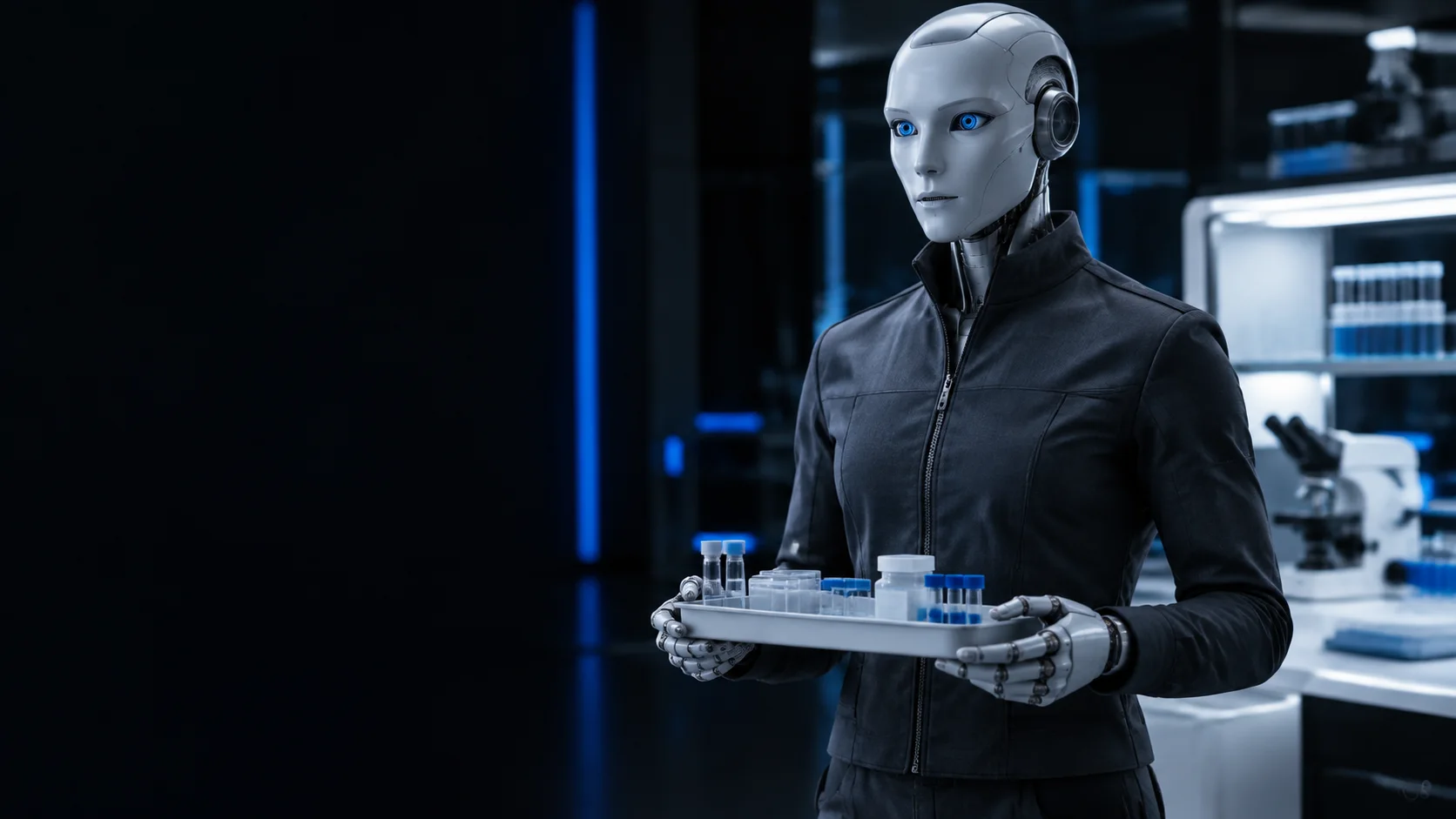
Optical eyes, speaker opening and discreet acoustic housings.
Concept hands for supervised object handling.
Fitted clothing around a recognisably engineered robot.
Planned tasks include moving supplies, handling objects and supporting people in shared workspaces. These are development intentions, not verified autonomous capabilities.
Optical sensing and discreet acoustic housings are part of the concept. Perception, object recognition and awareness of nearby people would need to be assessed in controlled settings.
Articulated hands are intended to explore grasping, carrying and placing objects. Testing would examine repeatability, contact forces and the handling of different shapes and materials.
Supervision, clear task boundaries and safe interruption are design priorities. Starion Eco is the first intended onboard energy-management application for this family.
Document the architecture and test methods. Evaluate repeatability and response under controlled conditions. Publish results when available, with the operating conditions, test method and measurement scope beside each figure.
Explore interface usability, supervised tasks and workflow fit in non-clinical environments. Use findings to inform the next design iteration.
Any progression depends on documented findings and appropriate oversight. The concept visuals do not demonstrate a built prototype or verified performance.
For clinical insight, simulation collaboration and technology partnerships.